Municipal automated carts handle standard 96-gallon weekly refuse, but estate transitions, seasonal garage clear-outs, and room rehabilitations quickly create curbside violations under local sanitation codes. Piling…
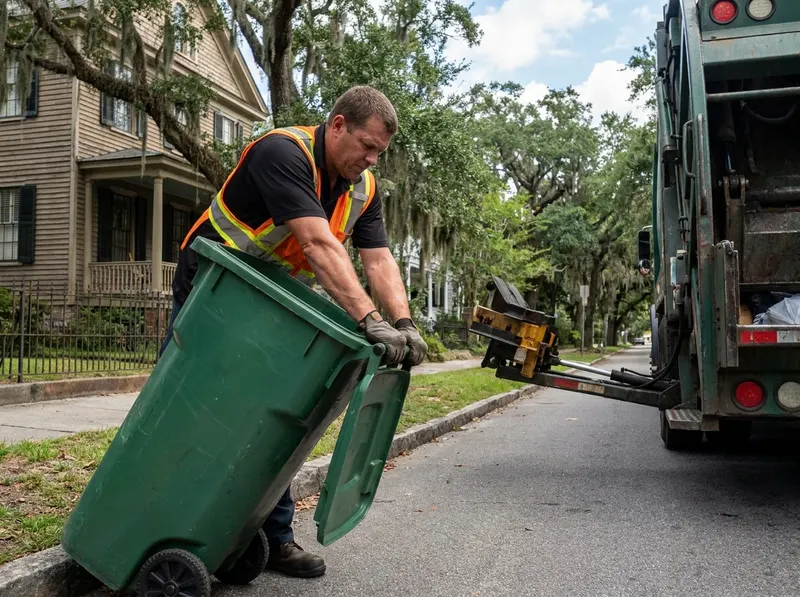
Municipal automated carts handle standard 96-gallon weekly refuse, but estate transitions, seasonal garage clear-outs, and room rehabilitations quickly create curbside violations under local sanitation codes. Piling twenty contractor bags along narrow brick lanes in the Victorian District or beneath low moss canopies along Bluff Drive in Isle of Hope often triggers administrative notices or creates waterlogged street obstructions before bi-weekly city sweeps arrive. Private curbside collection steps into this operational gap by taking piled domestic detritus off streets and driveways in a single scheduled appointment. If materials fit entirely inside your regular roll-cart, standard utility services remain your most economical path; if solid volume spills across pavement, private roadside hauling clears the frontage before lawn turf suffocates or neighborhood associations file complaints.
Ground operations differ significantly across Chatham County terrain. In Gordonston and Ardsley Park, wide parkways allow heavy equipment access, whereas tight curbs in the Starland District and the Historic District require precision loading to keep parking lanes open and prevent blockages on one-way streets. For waterfront residences in Coffee Bluff and Wilmington Island, midday squalls and high coastal humidity can turn cardboard boxes and fabrics into heavy, water-soaked heaps within three hours. Setting refuse on pallets or hard asphalt near the curb edge preserves drainage swales and avoids curb gouges. The trade-off between private bulk loading and standard municipal trash tags comes down to speed and aggregate volume: municipal tags require weeks of advance booking and restrict weight strictly to city limits, while private trucks clear multi-cubic-yard residential piles on a direct schedule.
1. Stage all discarded items within 5 feet of the roadway curb or driveway apron, keeping clear of overhead utility drops, low live oaks, and storm culverts.
2. Call (912) 724-7451 to log pile dimensions and schedule the service appointment.
3. The loading crew evaluates aggregate load volume at the curb, confirms the final quote against the $250 base standard, and loads the material out directly.
Every job gets a firm, written price after a free on-site visit.
Tell us about your curbside residential refuse collection job in Savannah and we'll send a clear, written quote, usually the same day.
 Eagle Hill Dumpster Rental