Municipal curbside pickup across Chatham County frequently limits storm cleanup to specific branch diameters, capping piles at small dimensions and taking weeks to cycle through residential wards. Standard city trucks…
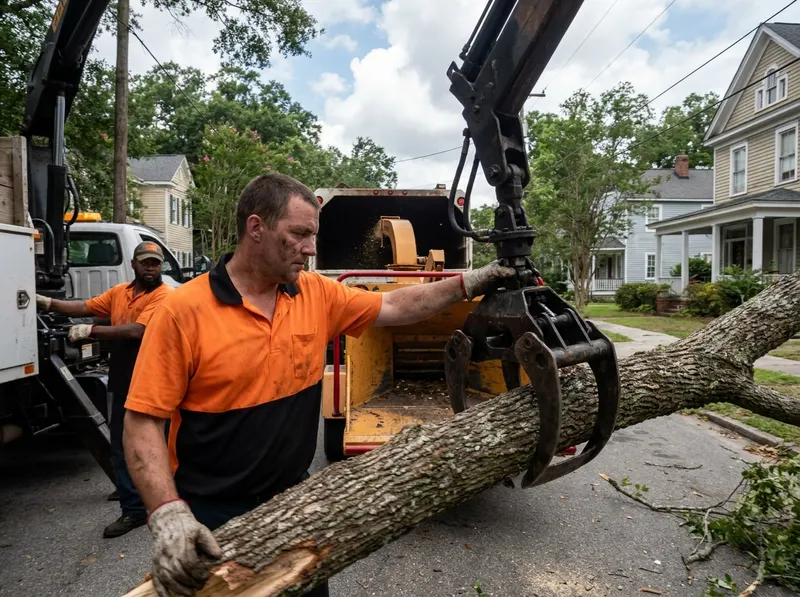
Municipal curbside pickup across Chatham County frequently limits storm cleanup to specific branch diameters, capping piles at small dimensions and taking weeks to cycle through residential wards. Standard city trucks will not haul mixed construction materials combined with wet pine limbs, which leaves coastal properties facing code citations or blocked access roads. If downed material consists solely of loose branches under 4 feet, waiting for city knuckle-boom trucks preserves cash; if the wreckage includes torn-off metal flashing, collapsed wooden privacy fences, or saturated insulation requiring rapid clearance before mold sets in, dedicated roll-off storm collection is the required route. The operational trade-off is paying private hauling fees against having rotting debris linger on damp turf for a month.
Property constraints in dense urban pockets demand calculated placement. In the Historic District, Starland District, and the Victorian District, narrow lane clearances, overhead utility lines, and low-hanging live oak canopies dictate precision positioning of haulers. Drivers place wood ground-protection boards under every container roller to safeguard historic brick pavers, aggregate walkways, and asphalt driveways from crushing or gouging. Out in low-lying maritime environments like Isle of Hope, Wilmington Island, and Coffee Bluff, standing stormwater and soft sandy soil require roll-offs set squarely on stable concrete aprons rather than sod, preventing heavy steel bins from sinking under waterlogged loads.
Residential spaces in Ardsley Park, Parkside, and Gordonston often require rapid site turnarounds so neighborhood parking and sidewalk corridors remain open. 1. Contact dispatch at (912) 724-7451 to establish volume requirements and driveway access parameters. 2. A roll-off container arrives with protective wooden runners placed directly beneath the steel rails to stop driveway surface abrasion. 3. Debris is loaded directly by property owners or site crews, separating hazardous liquids while packing dense limbs flat. 4. The hauler hooks the loaded bin, secures the containment tarp, and transports the payload directly to licensed regional sorting and landfill facilities.
Every job gets a firm, written price after a free on-site visit.
Tell us about your storm debris garbage collection job in Savannah and we'll send a clear, written quote, usually the same day.
 Eagle Hill Dumpster Rental